
Is Spinal Decompression Therapy Safe? A Chiropractor’s Evidence-Based Answer
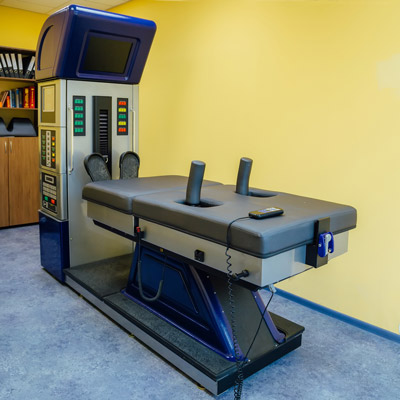
If you’re dealing with back pain, sciatica, or disc problems, chances are you’ve heard about spinal decompression therapy. And if you’re reading this article, you probably have one very important question: is spinal decompression safe?
It’s a smart question to ask. Anytime you’re considering a treatment for your spine, you deserve clear, honest answers about what’s involved and what the risks might be. At Ray Chiropractic in Redlands, CA, we have these conversations every single day with patients just like you.
The short answer? Yes – spinal decompression therapy is generally safe when performed correctly by a trained professional. But like any treatment, safety depends on proper screening, correct diagnosis, and personalized care. Let’s break down everything you need to know.
Quick Answer: Is Spinal Decompression Safe?
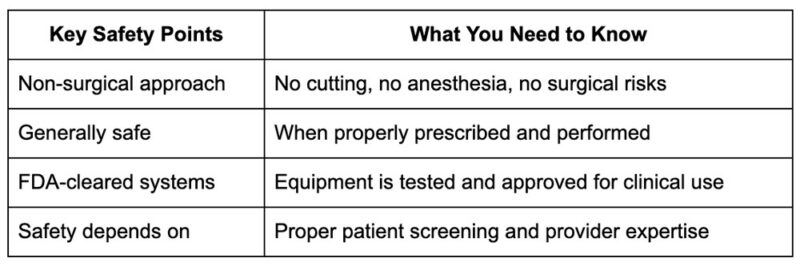
Non-surgical spinal decompression is designed to gently stretch the spine, creating negative pressure that helps relieve disc pressure and promote healing. It’s not invasive, and for the right candidates, it’s one of the safest conservative options available.
What Research and Clinical Evidence Say About Safety
Spinal decompression has been used in conservative spine care for decades. It’s not new, experimental, or untested and the evidence backs up its safety profile when used appropriately.
What the research shows:
- FDA-cleared decompression systems meet strict safety and performance standards
- Complication rates are significantly lower compared to injections or surgery
- Most adverse events are mild and temporary when they occur at all
Dr. Apfel and colleagues, in research published in the Journal of Neurosurgery: Spine, found that non-surgical decompression therapy showed favorable safety outcomes with minimal risk when proper protocols were followed and patients were appropriately screened.
At Ray Chiropractic, we follow evidence-informed protocols that prioritize your safety every step of the way.
Can Spinal Decompression Cause Damage?
Let’s be honest here – yes, problems can occur, but they’re rare and almost always preventable. The key word is “can” not “will”.
When problems happen, it’s usually because of:
- Poor screening – treating someone who wasn’t a good candidate to begin with
- Incorrect diagnosis – misunderstanding the root cause of pain
- Excessive or improperly applied force – using settings that are too aggressive for the patient
This is exactly why spinal decompression therapy should never be “cookie-cutter”. Every patient is different. Every spine is different. Your treatment plan should reflect that.
Potential Risks and Side Effects: What’s Normal vs. Concerning
Common, Mild Side Effects
Most patients tolerate spinal decompression very well. However, some mild side effects are completely normal – especially in the first few sessions.
What’s normal:
- Muscle soreness (similar to after a workout)
- Temporary stiffness or tightness
- Mild post-treatment fatigue as your body adjusts
These typically resolve within 24–48 hours and are signs your body is responding to treatment.
Rare or Warning Symptoms
While uncommon, certain symptoms should never be ignored. If you experience any of the following, contact your chiropractor immediately:
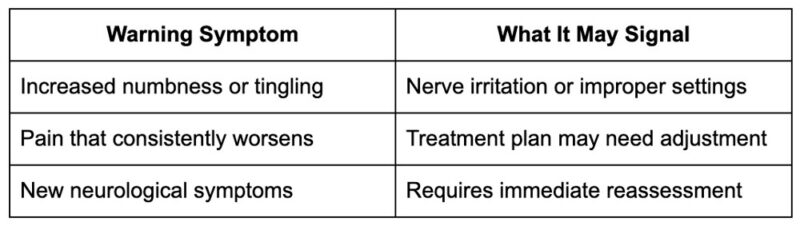
We monitor every patient closely to catch and address any concerns before they become problems.
Who Should Avoid Spinal Decompression Therapy?
Not everyone is a good candidate for non-surgical spinal decompression. Being upfront about contraindications is part of providing safe, ethical care.
Absolute Contraindications (Do Not Use)
- Active spinal fractures
- Spinal tumors or infections
- Advanced osteoporosis with high fracture risk
- Severe spinal instability
- Recent spinal surgery without medical clearance
Conditions Requiring Careful Evaluation
Some conditions aren’t automatic disqualifiers, but they do require extra caution and coordination with your medical team:
- Pregnancy
- Severe spinal stenosis
- Spondylolisthesis (vertebral slippage)
- Implanted spinal hardware
- Advanced degenerative conditions
If any of these apply to you, we’ll work closely with your physician to determine whether decompression is appropriate.
Is Spinal Decompression Safe for Specific Conditions?
Let’s address the most common conditions we see:
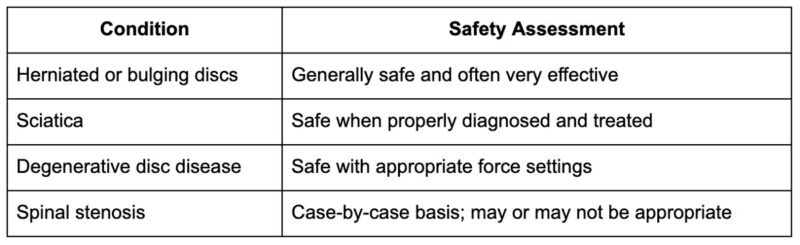
The key is individualized assessment. What works safely for one person may not be right for another.
How We Minimize Risks During Spinal Decompression
Safety isn’t accidental – it’s the result of careful protocols and attention to detail. Here’s exactly how we keep you safe at Ray Chiropractic:
Our Safety Protocol:
- Comprehensive examination and imaging before any treatment begins
- Personalized force settings tailored to your body and condition
- Gradual progression – we start gently and adjust based on your response
- Continuous symptom monitoring throughout every session
- Integration with corrective care to address underlying spinal issues
- Ongoing reassessment and plan adjustments as you progress
As your chiropractor Redlands, we never take a one-size-fits-all approach. Your safety is built into every decision we make.
Get Safe, Personalized Spinal Decompression Care
So, is spinal decompression safe? The answer is yes – when it’s done right, by the right provider, for the right patient. Safety comes from careful screening, proper technique, and personalized care every step of the way.
At Ray Chiropractic in Redlands, CA, we believe in an evaluation-first approach. We’ll never recommend spinal decompression unless we’re confident it’s safe and appropriate for your specific condition. And if it’s not the right fit, we’ll tell you that too.
Ready to explore whether spinal decompression is right for you? Visit Ray Chiropractic in Redlands, CA. Call or book a comprehensive consultation today – let’s get you answers.
Your spine deserves care that’s both effective and safe. We’re here to provide exactly that.
Frequently Asked Questions
Is spinal decompression painful?
No. Most patients find it relaxing and even fall asleep during sessions. You should feel a gentle pulling sensation – never sharp pain.
Is spinal decompression safe long-term?
Yes, when used appropriately. Many patients benefit from periodic maintenance sessions without any long-term risks.
How many sessions are safe?
Treatment plans typically range from 15–30 sessions depending on your condition. We monitor your progress closely throughout.
Is it safe for older adults?
Absolutely – as long as they’re properly screened. Many of our older patients respond beautifully to decompression therapy.
Is spinal decompression FDA approved?
Decompression equipment itself is FDA-cleared. The therapy is widely recognized as a safe, non-surgical treatment option.