
Tension Headaches vs Migraines: How Chiropractic Care Can Help With Both

If you get frequent headaches, you may wonder what kind you have and how to find relief. Two of the most common types are tension headaches and migraines, and they are not the same. Knowing the difference between migraines and tension headaches helps you treat them the right way. The good news is that chiropractic care can help with both. In this guide, we explain how these two headaches differ, what sets them off, and how a chiropractor can help you feel better.
What are Tension Headaches?
Tension headaches usually cause a dull, steady ache on both sides of the head. Many people describe it as a tight band around the forehead.
They are often linked to stress, poor posture, and muscle tension in the neck and shoulders. Symptoms are typically mild to moderate and do not usually include nausea or sensitivity to light.
What is a Migraine?
A migraine is more intense and often causes throbbing pain on one side of the head.
Common symptoms include nausea, sensitivity to light or sound, and episodes that can last for hours or even days. Migraines can interfere with daily activities and are often triggered by stress, hormonal changes, or sleep issues.
Tension Headaches vs. Migraines: Understanding the Difference
Although tension headaches and migraines are different conditions, they can share some overlapping symptoms. Both may vary in intensity from person to person, and some people experience symptoms such as nasal congestion during an episode. Because the symptoms can overlap, it is important to understand the key differences between the two.
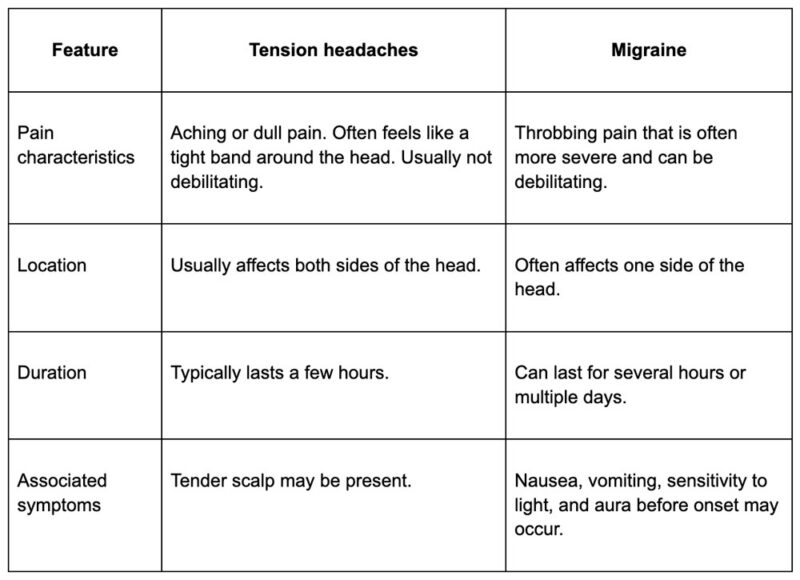
This comparison helps you tell the two apart and understand when it is worth seeing a professional.
What Causes Tension Headaches and Migraines?
Both types of headaches have their own causes. For tension headaches, the most common causes are stress, muscle strain, and poor posture. Sitting with your head forward for hours puts extra strain on the neck. Migraine triggers can include stress, hormonal changes, bright lights, strong smells, skipped meals, and certain dietary choices. Environmental factors and poor sleep can play a part too. Learning your own patterns is a helpful way to reduce how often the pain returns.
How Chiropractic Care Can Help with Both
Many headaches are closely linked to the neck and spine. When the bones in your neck and upper back are out of line, these spinal misalignments can irritate nerves, tighten muscles, and reduce blood flow to the brain. Any of these can trigger or worsen a headache.
A chiropractor works to correct these problems at the source. Gentle chiropractic adjustments, also called spinal adjustments, help bring the spine back into line. This can ease muscle tension, calm nerve irritation, and support better blood flow and nervous system function.
For tension headaches, a chiropractor may relax the tight muscles in your neck and shoulders, improve your posture, and use soft tissue work like trigger point therapy or myofascial release.
For migraines, chiropractic care offers a way to reduce how often attacks happen and how severe they feel, by easing spinal misalignments and nerve irritation and by helping you manage your triggers.
Because this care is non-invasive and drug free, it works to address the root causes of headaches rather than just covering the symptoms.
Everyday Tips to Prevent Headaches
Along with professional care, a few daily habits can lower how often these headaches strike.
- Manage stress. Deep breathing, short breaks, and gentle movement keep tension from building.
- Sit and stand tall. Good posture takes pressure off your neck and upper back.
- Stay hydrated and eat on time. Skipping meals or water can set off the pain.
- Move your body. Light exercise loosens tight muscles and boosts blood flow.
- Sleep well. A steady sleep routine helps your body rest and recover.
These small steps work well alongside a treatment plan from your chiropractic team, and they can make a real difference over time.
When to See a Doctor About a Headache
Most tension headaches and migraines are not dangerous, but some headaches need quick medical care. See a doctor right away if you have:
- A sudden, very severe head pain that feels like the worst of your life
- A headache with fever, confusion, weakness, or trouble speaking
- A headache with vision changes, or one that starts after a head injury
These can be signs of a more serious problem. When in doubt, it is always safest to get checked.
Find Lasting Headache Relief at Ray Chiropractic
You do not have to live with frequent headaches. With the right care, many people find real, lasting relief.
Dr. Ray Sahawneh, DC, has served the Redlands community since 2007, helping patients get to the root of their pain. Along with Dr. Danny Duong, DC, the team at Ray Chiropractic uses gentle, effective chiropractic care to support the whole body.
If tension headaches or migraines are slowing you down, a chiropractor can check your spine and build a plan that fits you. The team also offers therapeutic exercises and massage therapy to support your care.
FAQs
What is the main difference between tension headaches and migraines?
Tension headaches feel like a tight band on both sides of the head and are usually mild. Migraines are more severe, often throbbing on one side, and can bring nausea and light sensitivity.
Can a chiropractor help with migraines?
Yes. Chiropractic care can help reduce how often migraines happen and how severe they feel by easing spinal misalignments and muscle tension in the neck.
How does chiropractic care help tension headaches?
A chiropractor relaxes tight neck and shoulder muscles, improves posture, and corrects spinal misalignments that can trigger tension headaches.
How soon will I feel better?
It varies. Some people feel better after a few visits, while others need a longer plan. Your chiropractor can give you a clearer idea.