
Can a Chiropractor Help with Hip Pain?
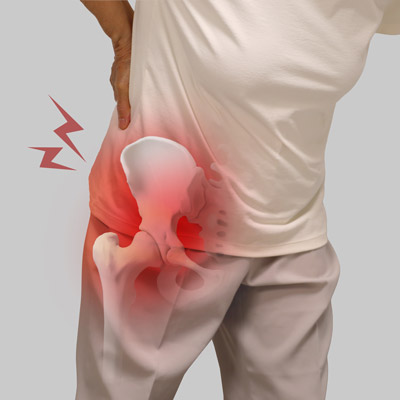
Yes, chiropractors can significantly help with hip pain by correcting pelvic misalignments, restoring joint mobility, reducing muscle tension, and addressing the root biomechanical causes – often providing relief where other treatments have failed.
Understanding Hip Pain
Your hip doesn’t exist in isolation. It’s intimately connected to your pelvis, sacroiliac (SI) joints, and lumbar spine – forming an integrated system that controls everything from walking to sitting.
The Hip-Pelvis-Spine Connection
When one piece of this system shifts out of alignment, the entire structure compensates. A tilted pelvis forces your hip to work harder. A misaligned SI joint creates uneven weight distribution. A lumbar disc problem refers to pain directly into your hip.
This interconnection explains why so many hip pain cases involve structural problems elsewhere and why chiropractor for hip pain treatment often focuses beyond just the hip itself.
Muscular Causes of Hip Pain
Tight, overworked, or imbalanced muscles frequently create hip discomfort:
- Hip flexor tightness
- Piriformis syndrome
- IT band irritation
Joint Causes of Hip Pain
Structural problems within or around the hip joint include:
- Hip arthritis: Cartilage breakdown causing stiffness, grinding, and deep joint pain
- Bursitis: Inflamed fluid sacs creating sharp pain with movement
- Labral irritation: Torn or damaged cartilage rim causing clicking and catching
Pelvic & Spinal Causes
Often, what feels like hip pain actually originates from:
- SI joint dysfunction: Misaligned sacroiliac joints create one-sided hip and buttock pain that worsens with standing or climbing stairs.
- Pelvic tilt: When your pelvis rotates forward or backward, it changes hip socket positioning and creates abnormal wear patterns.
- Functional leg-length discrepancy: Uneven leg length (real or apparent) forces your hips to compensate, creating chronic strain.
Referred Pain from the Lumbar Spine
Nerve compression at L4-S1 levels often sends pain into your hip, buttock, and groin – even when the actual problem is in your lower back. This is why comprehensive evaluation matters so much.
Can a Chiropractor Help with Hip Pain?
Can a chiropractor help with hip pain? Absolutely and often more effectively than approaches treating only symptoms rather than structural causes.
Proven Benefits of Chiropractic Care
Hip pain chiropractic adjustment and corrective techniques provide multiple benefits:
- Restores hip mobility through gentle joint manipulation
- Corrects pelvic and SI joint misalignments eliminating compensatory strain
- Reduces inflammation and muscular tension around the hip
- Improves gait and weight distribution preventing future problems
- Reduces nerve irritation from spinal or pelvic compression
- Corrects postural imbalances addressing root causes
- Provides long-term functional improvement not just temporary relief
What Chiropractic Cannot Do
Being realistic about limitations prevents disappointment:
- Reverse severe cartilage loss in advanced arthritis
- Replace hip replacement surgery when structurally necessary
- Provide “instant” correction for decades of degeneration
However, even in these cases, chiropractic care often reduces pain and improves function, sometimes delaying or avoiding surgery.
Hip Conditions Chiropractors Commonly Treat
Chiropractic treatment for hip pain proves particularly effective for these conditions:
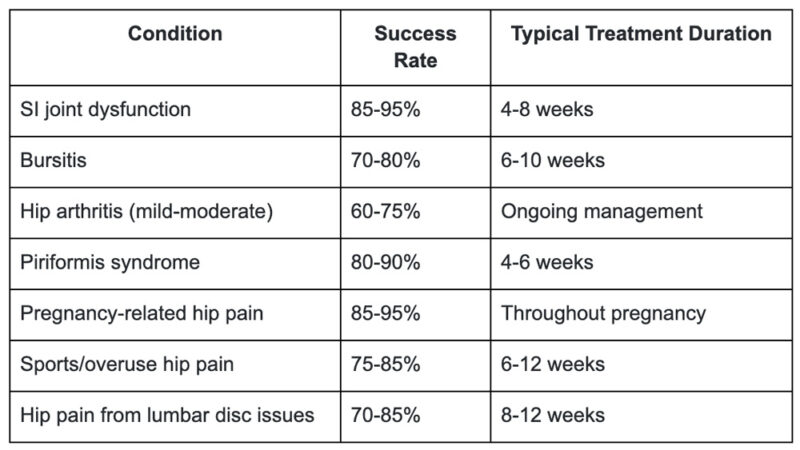
How Chiropractors Diagnose Hip Pain Properly
Accurate diagnosis separates effective treatment from wasted time and money. Is chiropractic safe for hip pain? Yes, when preceded by proper evaluation.
Comprehensive Evaluation
Your first visit includes detailed assessment:
- Health history: When did pain start? What makes it better or worse? Previous injuries or treatments?
- Gait & movement analysis: How you walk reveals compensation patterns and structural imbalances.
- Hip ROM testing: Measuring range of motion in all directions identifies restrictions.
- Pelvic alignment screening: Checking for rotation, tilt, or height differences.
- Neurological + orthopedic tests: Specific tests reproducing your symptoms and ruling out serious pathology.
Imaging When Needed
Digital X-rays reveal structural problems like arthritis, bone spurs, pelvic misalignment, or leg length discrepancies invisible during physical examination.
When MRI is recommended:
- Suspected labral tears
- Unexplained severe pain
- Planning for potential surgical consultation
Detecting degeneration vs. inflammation guides treatment approach – inflammation responds quickly while degeneration requires longer-term management.
How Chiropractors Treat Hip Pain
At Ray Chiropractic, we use multiple evidence-based techniques tailored to your specific hip condition.
Corrective Chiropractic Techniques
- Pelvic + SI joint adjustments: Gentle manipulation restoring proper sacroiliac alignment and eliminating compensatory hip strain.
- Lumbar adjustments for referred hip pain: When hip pain originates from nerve compression, correcting the spine resolves hip symptoms.
- Hip mobilization: Specific movements improving joint capsule mobility and reducing stiffness.
- Flexion-distraction for nerve-related pain: Gentle traction-based technique decompressing lumbar nerves referring pain into the hip.
Corrective Chiropractic Care Methods
Beyond standard adjustments, we employ advanced corrective protocols:
- Mirror-image adjustments: Correcting structural patterns causing chronic hip stress
- Neuromuscular re-education: Retraining proper movement patterns
- Digital posture analysis: Identifying full-body imbalances contributing to hip problems
- Leg-length imbalance correction: Using heel lifts or specific adjusting to equalize leg length
- Postural rehabilitation exercises: Strengthening weak muscles and stretching tight ones
As a certified chiropractor Redlands patients trust for complex cases, I’ve seen these corrective approaches succeed where traditional treatment failed.
Complementary Therapies
We combine chiropractic with additional modalities when appropriate:
- Dry needling: Releases trigger points in hip flexors, piriformis, and gluteal muscles.
- Soft tissue therapy & myofascial release: Addresses fascial restrictions limiting hip mobility.
- Shockwave therapy: Accelerates healing in chronic tendinitis and bursitis cases.
- Orthotics for gait correction: Custom inserts improving foot mechanics and reducing hip stress.
- Muscle rebalancing techniques: Strengthening inhibited muscles while releasing overactive ones.
Is Chiropractic Safe for Hip Pain?
When performed by qualified practitioners, chiropractic treatment for hip pain is extremely safe with minimal side effects.
What to Expect
Mild soreness for 24-48 hours after initial treatments is normal as your body adapts to improved alignment. This typically resolves quickly.
When NOT to See a Chiropractor
Red flags requiring urgent medical care:
- Hip pain following significant trauma (falls, accidents)
- Severe, sudden-onset hip pain with fever (possible infection)
- Unable to bear weight on the leg
- Hip pain with unexplained weight loss
- Progressive weakness or numbness
These symptoms require immediate medical imaging and evaluation to rule out fractures, infections, or serious pathology.
Safety for Special Populations
- Seniors: Chiropractic is safe for older adults – we simply modify techniques based on bone density and arthritis severity.
- Pregnant patients: Hip and pelvic pain during pregnancy responds beautifully to gentle chiropractic care. We use specialized pregnancy tables and techniques safe for all trimesters.
Real Patient Results: Case Studies
Case 1: SI Joint Dysfunction 42-year-old runner with one-sided hip pain for 6 months. Previous PT and cortisone injections provided only temporary relief. X-rays revealed significant pelvic rotation and SI joint dysfunction. After 8 weeks of pelvic adjustments and corrective exercises, pain reduced 90% and she returned to running pain-free.
Case 2: Chronic Hip Pain in Active Senior 67-year-old with moderate hip arthritis told surgery was inevitable. Combination of hip mobilization, SI adjustments, and soft tissue work improved ROM by 40% and reduced pain by 75%. Two years later, still avoiding surgery and maintaining an active lifestyle.
Case 3: Piriformis Syndrome 35-year-old office worker with deep buttock and hip pain worsening with sitting. Diagnosis revealed piriformis syndrome from prolonged sitting and pelvic imbalance. Treatment combining adjustments, dry needling, and ergonomic modifications eliminated symptoms in 5 weeks.
Get Relief from Hip Pain Today
At Ray Chiropractic, we specialize in finding and fixing the real reason your hip hurts. Whether your pain stems from SI joint dysfunction, arthritis, muscle imbalances, or spinal problems, we have the expertise and advanced techniques to help you move better and feel better.
Stop letting hip pain limit your life. Schedule your comprehensive hip pain evaluation today. We’ll perform detailed structural analysis, explain exactly what’s causing your pain, and create a personalized treatment plan designed to provide lasting relief – not just temporary symptom management.
Experience the difference that expert hip pain treatment options make when you choose a best chiropractor for hip pain who understands the complex relationship between your spine, pelvis, and hips.
FAQs
Can a chiropractor fix hip pain permanently?
For conditions caused by structural misalignment or muscle imbalance, yes – correction can be permanent with proper maintenance. Degenerative conditions require ongoing management but often improve dramatically.
Can chiropractic help hip arthritis?
While we can’t reverse cartilage damage, we significantly improve joint mechanics, reduce inflammation, and restore mobility. Many arthritis patients experience substantial pain reduction and functional improvement.
Can a chiropractor make hip pain worse?
Rare when proper evaluation precedes treatment. Temporary soreness is normal; progressive worsening indicates technique modification is needed.
How many sessions until I feel better?
Most patients notice improvement within 2-4 visits. Complete resolution typically requires 6-12 weeks depending on condition severity and chronicity.