
Can Stress Cause Back Pain?
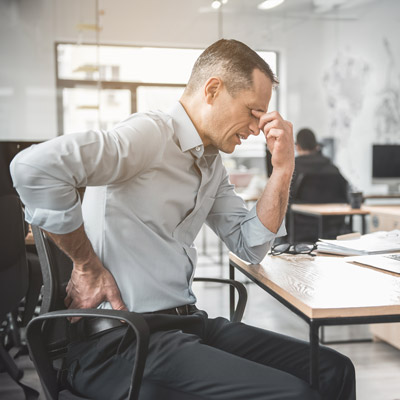
If you’re reading this, you’re probably dealing with back pain that doesn’t have an obvious physical cause. Your doctor may have said, “Your MRI looks fine” or “It’s probably just stress” leaving you frustrated and wondering if the pain is “all in your head”. At Ray Chiropractic in Redlands, CA, I help patients understand that stress-related back pain is completely real, measurably physical, and absolutely treatable.
Can Stress Really Cause Back Pain?
Can stress really cause back pain? Absolutely. Research consistently demonstrates that psychological stress triggers measurable physical changes creating genuine musculoskeletal pain.
Stress as Trigger vs Contributing Factor
Direct trigger: Stress alone can create back pain in people with no underlying structural problems. The stress response itself generates muscle tension, inflammation, and altered movement patterns causing pain.
Contributing factor: Stress amplifies existing structural problems, making manageable issues unbearable. It lowers pain thresholds, reduces healing capacity, and promotes protective muscle guarding that worsens symptoms.
Why This Distinction Matters Clinically
Understanding whether stress is the primary cause or amplifying factor guides treatment. Pure stress-related pain responds beautifully to stress management combined with corrective care. Structurally-driven pain worsened by stress requires addressing both components simultaneously.
How Stress Causes Back Pain
Does stress cause back pain? Here are the proven mechanisms explaining exactly how stress creates physical suffering.
Muscle Tension and Guarding
Your stress response evolved for physical threats – preparing your body to fight or flee. When stress becomes chronic (work deadlines, financial worries, relationship conflicts), your muscles stay contracted even though no physical threat exists.
What happens:
- Chronic muscle contraction: Neck, shoulder, and back muscles remain semi-contracted for hours or days
- Reduced spinal motion: Tight muscles restrict normal vertebral movement, creating stiffness
- Muscle fatigue: Sustained contraction exhausts muscles, creating aching, burning sensations
Nervous System Overload
Stress activates your sympathetic nervous system – your body’s “accelerator pedal”. Chronic activation creates widespread physiological changes affecting pain perception.
Sympathetic dominance effects:
- Heightened pain sensitivity (lower pain threshold)
- Reduced parasympathetic (“rest and digest”) activity
- Impaired tissue healing and recovery
- Increased muscle tone throughout the body
Inflammation and Hormonal Effects
Chronic stress floods your body with cortisol – your primary stress hormone. While short-term cortisol helps manage acute stress, chronic elevation creates problems.
Cortisol imbalance consequences:
- Impaired tissue repair: High cortisol interferes with healing processes
- Increased systemic inflammation: Promotes inflammatory chemical release
- Enhanced pain sensitivity: Alters pain signal processing in spinal cord and brain
- Muscle breakdown: Chronic cortisol promotes muscle catabolism
Stress-Related Postural Changes
Emotional stress manifests physically through altered posture and body positioning.
Common stress postures:
- Forward head posture: Shoulders hunched, head jutting forward
- Rounded shoulders: Chest collapsed, upper back rounded
- Shallow breathing: Using only upper chest rather than diaphragm
- Jaw clenching: TMJ tension referring pain to neck and upper back
These postural patterns create mechanical stress on spinal structures, compounding stress’s direct physiological effects.
Reduced Movement and Physical Deconditioning
Stress often reduces physical activity through several mechanisms:
- Fear-avoidance behavior: Worrying that movement will worsen pain, so avoiding activity entirely
- Time constraints: Stress often correlates with work demands leaving no time for exercise
- Energy depletion: Chronic stress exhausts you, reducing motivation for movement
Consequences:
- Joint stiffness from decreased mobility
- Muscle weakness and atrophy
- Loss of spinal stability
- Reduced circulation impairing healing
Stress-Related Back Pain vs Structural Back Pain
Many patients ask: “Is my pain functional or structural?” The answer is often both.
Functional vs Structural Pain
Functional (stress-related): Pain from muscle tension, nervous system sensitization, and altered movement patterns without significant structural damage on imaging.
Structural: Pain from herniated discs, arthritis, fractures, or other anatomical problems visible on X-rays or MRI.
The reality: Most chronic back pain involves both components. Stress amplifies structural problems, and structural issues create stress about the condition – creating a vicious cycle.
Can Stress Create Structural Problems Over Time?
Yes, indirectly. Chronic muscle tension and altered movement patterns from stress eventually create:
- Accelerated disc degeneration from abnormal loading
- Facet joint arthritis from compensatory movements
- Ligament laxity from chronic asymmetric stress
- Postural deformities (increased kyphosis, loss of lumbar curve)
What begins as purely functional tension-based pain can transform into measurable structural problems over years.
How to Relieve Stress-Related Back Pain
Understanding how to relieve stress-related back pain requires addressing both immediate symptoms and underlying patterns.
Immediate Self-Care Strategies
When stress-related pain flares:
Breathing and relaxation:
- Diaphragmatic breathing (deep belly breaths)
- Progressive muscle relaxation
- 4-7-8 breathing technique (inhale 4, hold 7, exhale 8)
Gentle mobility:
- Cat-cow stretches
- Gentle torso rotations
- Walking (even 10-15 minutes helps)
Heat therapy:
- Warm shower or heating pad on tense muscles
- Increases blood flow and promotes relaxation
- 15-20 minutes, 2-3 times daily
Lifestyle Stress Management
Long-term strategies reducing stress’s physical impact:
Sleep hygiene:
- Consistent sleep schedule
- 7-9 hours nightly
- Cool, dark, quiet environment
- No screens 1 hour before bed
Regular movement:
- Daily walking (30+ minutes)
- Yoga or gentle stretching
- Strength training 2-3x weekly
- Activities you enjoy (dance, swimming, hiking)
Mindfulness practices:
- Meditation (even 5-10 minutes daily)
- Journaling
- Nature time
- Social connection
Corrective Chiropractic Care
As a chiropractor Redlands patients trust for comprehensive care, I address stress and musculoskeletal pain through structural correction.
How chiropractic helps stress-related pain:
- Restoring spinal alignment: Correcting postural distortions from chronic stress positioning
- Improving nervous system regulation: Adjustments help shift from sympathetic to parasympathetic dominance
- Correcting biomechanics: Addressing movement patterns that perpetuate pain
- Preventing recurrence: Structural correction breaks the stress-pain cycle at its root rather than temporarily masking symptoms
Stress Creates Real Physical Pain
Can stress cause back pain? The evidence is overwhelming – yes, through multiple proven mechanisms affecting muscles, nerves, hormones, posture, and movement patterns.
Your stress-related back pain isn’t imaginary, exaggerated, or “just in your head”. It’s a legitimate physical response to psychological stressors that deserves proper treatment addressing both the stress itself and its structural consequences.
At Ray Chiropractic, we don’t just tell stressed patients to “relax more”. We systematically correct the postural distortions, movement dysfunctions, and spinal misalignments that chronic stress creates – while educating you about stress management strategies supporting long-term relief.
Stop suffering in the stress-pain cycle. Schedule your comprehensive evaluation today. We’ll identify how stress is affecting your spine and nervous system, explain the connection clearly, and create a treatment plan addressing root causes rather than just masking symptoms.
Frequently Asked Questions
Can anxiety cause lower back pain?
Yes. Anxiety creates the same physiological responses as other stressors – muscle tension, nervous system activation, cortisol release – all contributing to lower back pain.
Can stress cause upper back or neck pain?
Absolutely. Stress commonly manifests in upper trapezius muscles, creating upper back and neck tension. Forward head posture from stress compounds this mechanical stress.
Can stress make existing back pain worse?
Definitely. Stress lowers pain threshold, increases muscle guarding, promotes fear-avoidance behaviors, and impairs healing – all amplifying existing structural problems.
Should I see a chiropractor for stress-related pain?
Yes. Chiropractic care addresses both the structural consequences of stress (postural distortions, movement dysfunction) and supports nervous system regulation – providing more comprehensive relief than addressing stress or structure alone.