
Early Signs of Carpal Tunnel Syndrome: What to Look For
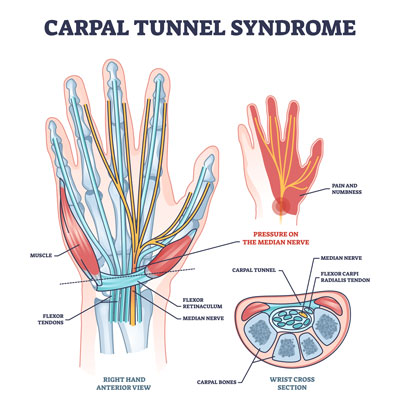
The early signs of carpal tunnel syndrome often include tingling, numbness, or mild pain in your thumb, index, and middle fingers. These symptoms may come and go, especially at night or during activities that require you to hold your wrist in one position.
At Ray Chiropractic in Redlands, CA, we understand how frustrating recurring hand numbness can be. Recognizing these early warning signs can help you understand your symptoms and know when to seek appropriate care.
What are the early signs of carpal tunnel syndrome?
Tingling and numbness in your fingers
One of the earliest signs is a tingling sensation in your fingers. It may feel like pins and needles, a mild electric shock, or your hand falling asleep.
These sensations typically affect:
- Thumb: Tingling or reduced sensation.
- Index finger: Numbness or occasional electric shock sensations.
- Middle finger: Pins and needles or discomfort.
- Ring finger: Symptoms may affect the side closest to your middle finger.
Your little finger is usually unaffected because it receives sensation from a different nerve.
Early numbness may last only a few minutes before disappearing. However, repeated episodes can indicate irritation or compression of the median nerve.
Hand numbness and discomfort at night
Nighttime numbness is another common early symptom. You may wake up with tingling fingers or feel the need to shake your hand to restore normal sensation.
This happens partly because bending your wrists while sleeping can increase pressure on the median nerve. Some people notice symptoms upon waking, while others experience discomfort that interrupts their sleep.
Symptoms during everyday activities
Early carpal tunnel symptoms can also appear during activities that involve holding your wrist in one position.
For example, you might experience tingling while:
- Driving and holding the steering wheel.
- Using your phone for an extended period.
- Holding a book while reading.
- Performing repetitive hand movements.
Some people also notice mild burning, aching, or discomfort in their hands and wrists. Pain can occasionally extend into the forearm.
These symptoms do not automatically mean you have carpal tunnel syndrome, but recurring discomfort deserves attention.
How do early carpal tunnel symptoms change over time?
Early carpal tunnel symptoms often appear occasionally, especially at night. As nerve compression continues, symptoms may become more frequent or persist during the day.
The following table shows how symptoms can differ as the condition progresses.
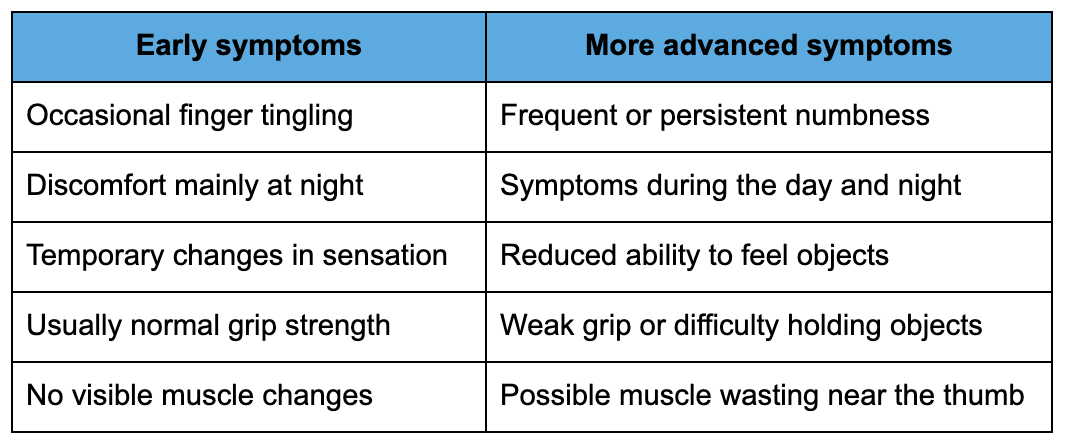
Symptoms can progress differently for each person. In advanced cases, prolonged median nerve compression may lead to lasting weakness or loss of sensation.
When should you see a doctor for carpal tunnel symptoms?
You should seek medical evaluation if hand numbness or tingling keeps returning, disrupts your sleep, or affects your ability to perform everyday tasks.
Pay particular attention if you notice:
- Numbness that lasts longer or occurs more frequently.
- Difficulty gripping objects or frequent dropping of items.
- Reduced sensation in your fingers.
- Increasing weakness in your thumb or hand.
- Visible muscle loss near the base of your thumb.
A healthcare professional can evaluate your symptoms and determine whether carpal tunnel syndrome or another condition is responsible.
Seek emergency care if numbness or weakness develops suddenly, particularly when accompanied by facial drooping, difficulty speaking, or weakness on one side of your body.
What causes early carpal tunnel symptoms?
Carpal tunnel syndrome develops when the median nerve becomes compressed as it travels through a narrow passage in your wrist called the carpal tunnel.
The median nerve helps control sensation in your thumb, index finger, middle finger, and part of your ring finger. It also supports certain thumb movements.
When tissues surrounding the nerve become swollen or pressure increases inside the tunnel, nerve function may be affected.
Several factors can increase your risk, including:
- Diabetes: Can increase the risk of nerve problems.
- Rheumatoid arthritis: Inflammation around the wrist may contribute to nerve compression.
- Pregnancy: Fluid retention and hormonal changes may increase pressure within the carpal tunnel.
- Wrist injuries: Fractures or other structural changes can narrow the space around the nerve.
- Repetitive or forceful hand activities: Certain tasks involving forceful gripping, vibration, or repeated wrist movements may contribute to symptoms.
How is carpal tunnel syndrome different from other causes of hand numbness?
Hand numbness can have several causes, depending on which nerve is affected.
- Carpal tunnel syndrome: Usually affects the thumb, index, middle, and part of the ring finger.
- Pinched nerve in the neck: May cause pain, tingling, or numbness that travels into the shoulder, arm, or hand.
- Ulnar nerve compression: Typically affects the little finger and part of the ring finger.
Because symptoms can overlap, a pinched nerve or another nerve condition may be mistaken for carpal tunnel syndrome. A healthcare professional can examine your symptoms and recommend further testing if needed.
What can you do when carpal tunnel symptoms first appear?
If you notice occasional tingling or numbness, these simple steps may help reduce discomfort and prevent symptoms from worsening.
- Reduce activities that trigger symptoms: Take breaks or modify movements that cause numbness, tingling, or wrist discomfort.
- Keep your wrists in a neutral position: Avoid bending your wrists for long periods to help reduce pressure on the median nerve.
- Wear a wrist splint at night: A properly fitted splint can keep your wrist straight while sleeping and may help relieve nighttime symptoms.
- Adjust your daily activities: Take regular breaks, avoid prolonged forceful gripping, and make small changes to your workspace to reduce wrist strain.
- Seek medical advice if symptoms persist: Consult a healthcare professional if numbness keeps returning, worsens, or affects your ability to grip objects.
Understanding your hand symptoms is the first step
Recognizing the early signs of carpal tunnel syndrome can help you understand when occasional tingling or numbness deserves medical attention. Symptoms that keep returning, interrupt your sleep, or affect your grip should not be ignored.
At Ray Chiropractic, Dr. Ray Sahawneh provides chiropractic care for musculoskeletal concerns, including problems involving the neck and spine that may contribute to arm or hand discomfort.
Because hand numbness can have several causes, identifying where the symptoms originate is important before choosing a treatment approach.
If you are experiencing persistent discomfort or would like to discuss whether chiropractic evaluation is appropriate for your symptoms, you can contact us to learn more about our services.
Frequently asked questions about early carpal tunnel symptoms
Can early carpal tunnel syndrome go away on its own?
Mild symptoms may improve on their own, but persistent numbness should be evaluated to prevent further nerve damage.
Which fingers are affected by carpal tunnel syndrome?
Carpal tunnel syndrome typically affects the thumb, index, middle, and part of the ring finger, but not the little finger.
Can carpal tunnel syndrome affect only one hand?
Yes. It can affect one or both hands, with symptoms sometimes more noticeable on one side.
What happens if early carpal tunnel symptoms are ignored?
Untreated carpal tunnel syndrome can lead to persistent numbness, hand weakness, and potentially permanent nerve damage.
