
Best Sleeping Position for Sciatica: How to Sleep with Less Pain
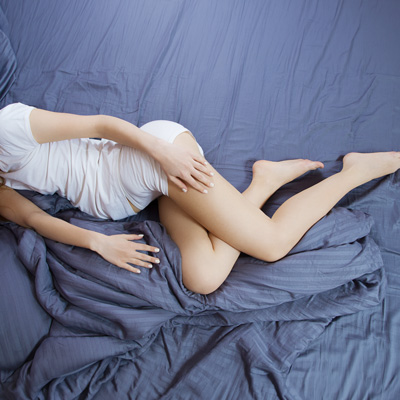
Sciatica can make it difficult to get comfortable at night. Pain may travel from your lower back or buttock down your leg, making it harder to fall asleep or even waking you up at 2 AM.
The best sleeping position for sciatica is one that keeps you comfortable without increasing your symptoms or sending pain farther down your leg. Small changes in your sleeping position and body support may help you sleep more comfortably through the night.
Why is sciatica often more uncomfortable at night?
Sciatica means the sciatic nerve, or one of the nerve roots feeding into it, is irritated somewhere.
When you lie down, the position of your lumbar spine, pelvis, and hips all change. Your sleep position shifts the load on all three, and some arrangements add tension right where the irritation already is. Nerve pain behaves differently from a muscle ache, flaring with position rather than with effort.
Then there is the stillness. Hours without movement let things stiffen, which is why the first few steps out of bed are often the worst of the day.
One thing worth saying plainly. If sciatica wakes you most nights, changing your pillows treats the discomfort, not the reason it is there.
3 sleeping positions to try for sciatica
1. Sleep on your side with a pillow between your knees
Lie on one side with your head supported so your neck stays level with your spine. Bend your knees gently rather than curling up tight. Then place a pillow between the knees, thick enough that your top knee sits level with your hip.
Without it, the top leg drops forward and rotates your pelvis for hours.
There is no rule that says people with sciatica must sleep on a certain side. If one side makes your symptoms worse, turn to the other and compare.
2. Sleep on your back with a pillow under your knees
Lie flat on your back with just enough support under your head. Put one or two pillows underneath your knees so they stay slightly bent. For many people that small bend takes strain off the lower back.
A thin rolled towel under the lumbar area helps some people. Skip it if it forces your back into a curve that hurts.
3. Try a modified fetal position
Some people find a little forward bend eases things, particularly when the problem sits at a disc.
Lie on your side and draw your knees gently toward your chest. Gently is the operative word. If leg pain or sciatica symptoms increase, unwind and try something else.
See more: Signs Your Leg Pain May Actually Be Sciatica: What to Watch For
What sleeping positions should you avoid with sciatica?
Two habits reliably make sciatica pain worse.
Sleeping on your stomach
If you sleep on your stomach, this position increases the arch in the lower back and adds rotation through the neck, which is a lot to ask of an already irritated area.
You do not necessarily have to stop if you sleep this way and feel fine. Try a thin pillow under your hips and pelvis first, which flattens the arch slightly and is often enough. If stomach sleeping consistently increases your symptoms, switch to your side or back.
Twisting your lower back
The common version is the upper body flat on the back with the legs and pelvis rolled to one side. It feels fine going to sleep, then holds an asymmetric position for six hours. A pillow supporting the knees usually solves it.
How to use pillows for sciatica pain at night
Where the pillow goes matters more than how many you own, and the right spot can reduce pain within a night or two.
- Side sleeper: one between the knees.
- Back sleeper: one or two underneath the knees.
- Stomach sleeper: a thin one under the hips if you cannot switch positions.
- Head pillow: enough to keep your neck level with your spine, without pushing your head upward or letting it drop toward the mattress.
The most common mistake is stacking. Three pillows under your head push your neck forward all night, and you will feel it by morning.
Is a firm or soft mattress better for sciatica?
Neither one treats sciatica, so start there.
You want enough support that your hips and shoulders do not sink into a hammock, without so much firmness that you get pressure points. Research on lower back pain generally favours medium firm over very firm, though response varies.
The bigger issue is usually age. A mattress that sags in the middle makes a comfortable position almost impossible to hold. Pain relief at night usually comes from small adjustments rather than one big purchase.
The only test that matters: can you stay comfortable without symptoms creeping down your leg?
Tips to help you sleep better with sciatica
Change one thing at a time. Sleep position, then pillow placement, then mattress. Change all three at once and you learn nothing. Small adjustments improve sleep quality more reliably than a new bed does.
Avoid a long stretch of sitting right before bed if sitting is what aggravates you. A short evening walk suits many people better.
Get out of bed in stages. Roll onto your side, lower your legs off the edge, and push yourself upright with your arms. Sitting straight up from flat twists the lower back at its stiffest moment.
Keep loose track of what helps. Which position, which side, what you did that day.
And do not tough out a position because an article called it the best one. Including this one.
When should you see a chiropractor for sciatica?
Sleeping position manages discomfort. It does not tell you what is irritating the sciatic nerve.
Consider an evaluation if the pain has lasted more than a week or two, keeps coming back, travels below the knee, or is affecting daily activities. Sciatica can come from different problems in the lower back, so identifying what is contributing to your symptoms matters before deciding on care.
At Ray Chiropractic in Redlands, an evaluation may include spinal alignment, range of motion, posture, nerve-related symptoms, and the surrounding muscles to better understand what may be contributing to the pain.
Find the right approach for your sciatica
A better sleeping position can make nights more comfortable, but there is no single position that works for everyone. The key is to find one that does not increase your pain or other symptoms in your leg.
If sciatica continues to affect your sleep or daily activities, it may be time to look beyond your sleeping position and find out what is contributing to your symptoms. Contact us to schedule an evaluation and learn what care may be right for you.
Frequently asked questions about sleeping with sciatica
Which side should I sleep on with sciatica?
There is no universal correct side. Pick whichever does not increase pain, numbness, or tingling, and put a pillow between the knees to support the pelvis.
Is sleeping on your back good for sciatica?
It suits a lot of people, especially with a pillow under the knees. If symptoms climb instead, that is useful information rather than a failure.
Why is my sciatica worse at night?
Position, hours without movement, and pressure around the irritated sciatic nerve all contribute. Night pain that never eases regardless of position needs a proper evaluation.
Can sleeping wrong make sciatica worse?
A position can aggravate sciatica pain, certainly. It is rarely the whole story, so if the pain keeps returning, look further.
