
Tingling in Feet: Causes, Symptoms and When to Seek Care

Tingling in feet can feel like pins and needles, prickling, buzzing, or a mild burning sensation. Sometimes, it happens after sitting in one position for too long and goes away once you start moving.
But tingling that keeps returning or does not go away may have another cause. Nerve irritation, neuropathy, diabetes, vitamin deficiencies, and other health conditions can all affect sensation in the feet.
Understanding when the symptom happens and what comes with it can help point toward the next step.
Common causes of tingling in feet
Tingling in the feet can be temporary or related to nerve irritation or an underlying health condition. Common causes include:
1. Sitting in one position for too long
Sitting with your legs crossed, staying in one position too long, or sleeping awkwardly can temporarily put pressure on a nerve. This may make your foot feel numb or “asleep.”
The tingling usually improves after you change position and move around. If it does not, or keeps returning, another cause may be involved.
2. Peripheral neuropathy
Peripheral neuropathy affects nerves outside the brain and spinal cord. When these nerves are damaged or not working normally, sensation in the feet can change.
Common symptoms include:
- Tingling or pins and needles
- Burning
- Numbness
- Sharp or shooting pain
- Increased sensitivity
- Weakness
Persistent tingling, burning, or numbness may be associated with neuropathy.
3. Diabetes
High blood sugar over time can damage peripheral nerves, especially those in the legs and feet. This is known as diabetic neuropathy.
Symptoms may include tingling, burning, pain, or reduced feeling in the feet. Because numbness can make cuts or blisters harder to notice, new or changing symptoms should be discussed with your healthcare provider.
4. Sciatica
Sciatica occurs when the sciatic nerve or related nerve roots become irritated. Symptoms can travel from the lower back or buttock into the leg and foot.
You may experience:
- Pain traveling down one leg
- Tingling in the leg or foot
- Numbness
- Weakness
This pattern may suggest that the tingling is coming from nerve irritation in the lower back rather than the foot itself.
5. A pinched nerve in the lower back
A pinched nerve in the lower spine can affect sensation farther down the leg. A bulging or herniated disc is one possible source of nerve irritation.
Depending on the nerve involved, you may feel tingling, numbness, pain, or weakness in certain areas of the leg or foot.
6. Vitamin deficiencies
Vitamin B12 and other nutrients help support healthy nerve function. A deficiency can sometimes contribute to tingling or numbness in the hands and feet.
Blood testing may be needed to confirm a deficiency. Avoid taking high dose supplements based on tingling alone.
7. Medication side effects
Certain medications and medical treatments can affect peripheral nerves and cause tingling or numbness.
If symptoms begin after starting a medication or treatment, speak with the healthcare professional who prescribed it. Do not stop prescribed medication on your own.
8. Other health conditions
Tingling in the feet can also occur with conditions that affect nerve function, including:
- Thyroid disorders
- Kidney disease
- Autoimmune conditions
- Certain infections
- Neurological disorders
Because many different conditions can cause similar sensations, persistent or recurring tingling should be properly evaluated.
Symptoms that may occur with tingling feet
What happens along with the tingling can provide useful information about where the problem may be coming from.
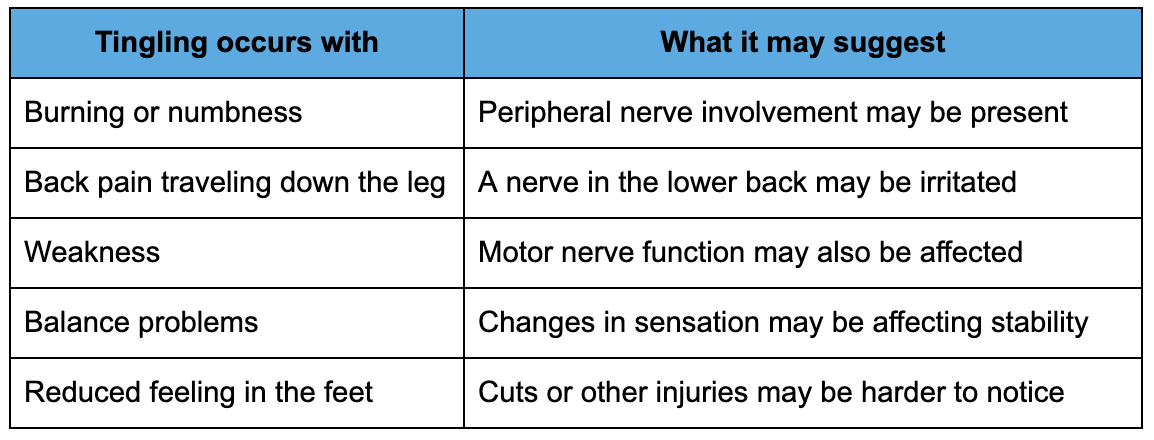
These patterns can help guide an evaluation, but symptoms alone cannot confirm the cause.
When should tingling in feet be evaluated?
An occasional foot that falls asleep and quickly returns to normal is usually different from tingling that happens repeatedly.
Consider getting evaluated if the tingling:
- Does not go away
- Keeps coming back
- Is gradually getting worse
- Affects both feet regularly
- Occurs with burning or numbness
- Comes with back or leg pain
- Affects walking or balance
- Occurs with muscle weakness
It is also worth paying attention to whether certain positions or movements consistently trigger the sensation.
When tingling needs urgent medical attention
Some neurological symptoms require prompt medical care.
Seek urgent medical attention if tingling begins suddenly with severe or rapidly worsening weakness, trouble speaking, major loss of coordination, or loss of bowel or bladder control.
These symptoms should not be treated as routine foot tingling.
Treatment options at Ray Chiropractic
When tingling in the feet is related to nerve irritation, spinal problems, or other conditions within the scope of chiropractic care, treatment at Ray Chiropractic is based on the findings of your evaluation.
Depending on the cause of your symptoms, care may include:
- Chiropractic care: May be used to address spinal alignment, joint function, and mechanical factors that may be contributing to nerve irritation.
- Spinal decompression: May be considered when tingling is associated with conditions such as a bulging or herniated disc, sciatica, or nerve compression.
- Therapeutic exercise: Specific exercises may help improve mobility, strength, and movement patterns that place unnecessary stress on the spine and surrounding structures.
- Neuropathy care: For people with peripheral neuropathy symptoms, care may focus on supporting nerve function and managing symptoms based on the underlying cause and individual findings.
Not every case of tingling in the feet is a chiropractic problem. If your symptoms suggest diabetes, a vitamin deficiency, medication effects, or another medical condition, additional medical evaluation may be recommended.
What to expect from care at Ray Chiropractic
Care begins with a consultation to review your symptoms, health history, and any related back or leg problems. We then perform an examination that may include spinal function, range of motion, posture, reflexes, and other neurological or orthopedic tests.
X-rays may be recommended when needed. After reviewing the findings, we explain what may be contributing to your symptoms and whether chiropractic care is appropriate.
Depending on your needs, your care plan may include chiropractic adjustments, spinal decompression, therapeutic exercises, or other supportive therapies.
Find out what may be causing your tingling feet
Recurring tingling can have several possible causes, which is why identifying the source matters before choosing a treatment.
At Ray Chiropractic in Redlands, CA, we take the time to look beyond the sensation itself and evaluate how your symptoms relate to your spine, nerves, movement, and overall function. Our goal is to determine whether your symptoms fall within the scope of conservative chiropractic care and recommend an appropriate next step.
If tingling, numbness, or related leg symptoms keep returning or interfere with daily activities, contact us to schedule an evaluation.
Frequently asked questions about tingling in feet
What is the most common reason for tingling in feet?
Temporary pressure on a nerve is a common reason a foot may tingle or “fall asleep.” Tingling that persists or repeatedly returns can have other causes, including neuropathy and nerve irritation.
What are the first signs of neuropathy in the feet?
Early symptoms may include tingling, pins and needles, burning, numbness, or changes in sensitivity. The exact symptoms and how they progress depend on the cause of the neuropathy.
Can a pinched nerve cause tingling in the feet?
Yes. Irritation or compression of certain nerves in the lower spine can cause tingling, numbness, pain, or weakness that travels into the leg and foot.
Can sciatica make your foot tingle?
Yes. Sciatic nerve irritation can cause tingling or numbness that travels from the lower back or buttock through the leg and into the foot.
When should I worry about tingling in my feet?
Tingling should be evaluated when it persists, gets worse, keeps returning, or occurs with weakness, loss of sensation, balance problems, or significant pain. Sudden tingling with serious neurological symptoms requires urgent medical attention.
